







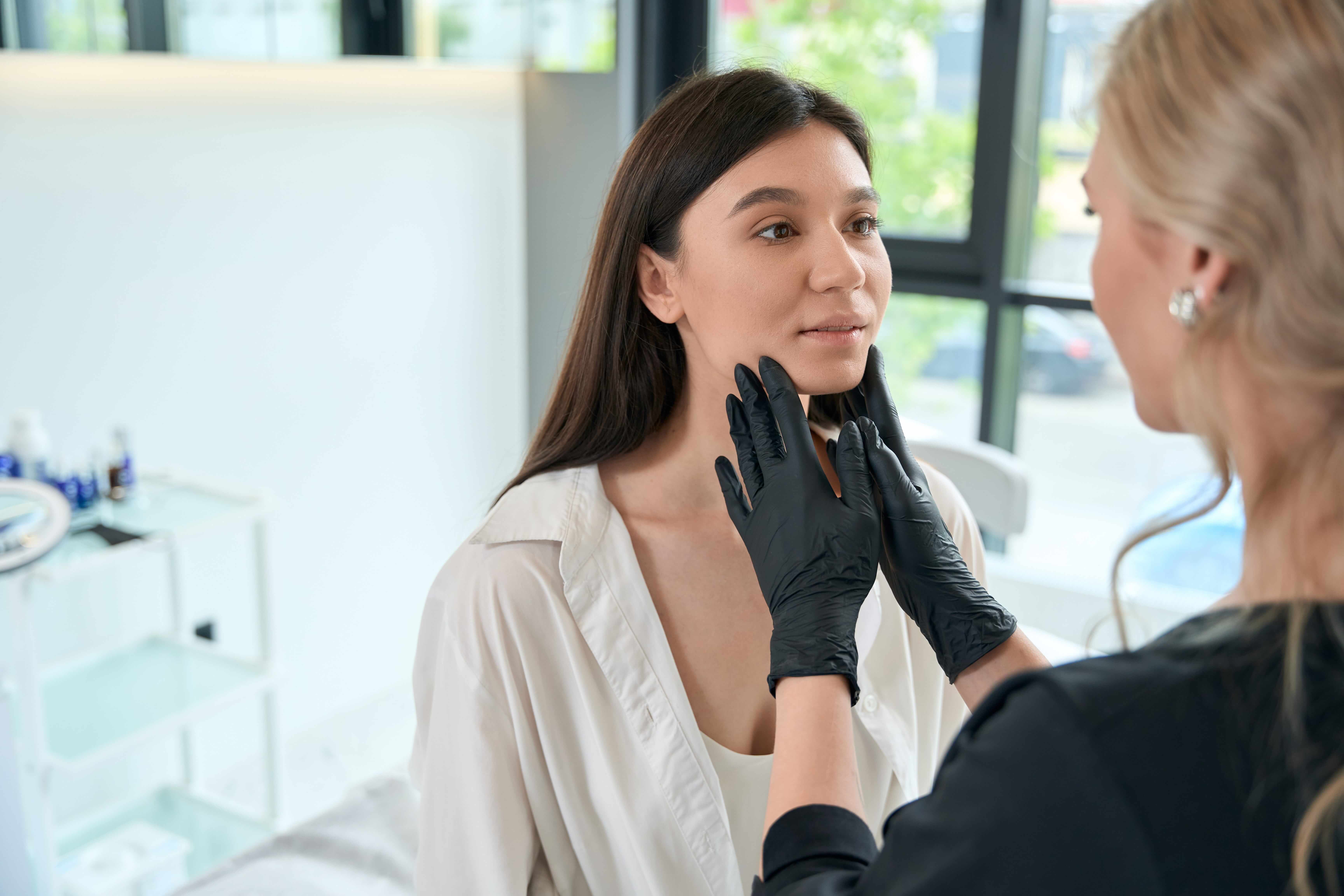
The Question Every First-Timer Is Really Asking
Every first-time patient asks "will it hurt?" during their consultation. It is the polite version of what they actually want to know. What they are really asking is: what will it feel like the moment that needle enters my forehead? How long does that sensation last? Will I feel the product going in? And which part of my face is the worst?
Clinics rarely answer any of those questions with the specific, sensory detail that would actually help. You get reassured with "just a small pinch" and then left to imagine the rest. The imagination is almost always worse than the reality, but only if someone takes the time to walk you through precisely what each area feels like, second by second. That is what this guide does.
If you are researching anti-wrinkle injections and cannot quite bring yourself to book because you do not know what you are walking into, read this first. It will not talk you into anything. It will simply tell you what to expect.
What Actually Happens During the Injection
Anti-wrinkle injections use botulinum toxin, delivered via an extremely fine needle into specific facial muscles. The needle used is far narrower than a standard vaccination needle or the needle used for a blood draw. If you were to place it next to a typical sewing needle, it would look almost hairlike by comparison.
Each individual injection takes two to four seconds. That is not an approximation designed to reassure you; it is simply how long it takes to insert the needle, deposit a tiny volume of product, and withdraw. The sensation exists only while the needle is present. The moment it is withdrawn, the sensation stops. There is no lingering sting from the liquid itself because the volume is so small that you will not feel it entering the muscle at all.
A typical first treatment covers three areas: the horizontal lines across the forehead, the frown lines between the eyebrows, and the crow's feet at the outer corners of the eyes. Combined, this involves roughly 15 to 20 individual injections, though some practitioners use slightly fewer. The entire treatment, including marking the injection points beforehand, takes between five and ten minutes. The time you spend waiting in the chair before it starts is genuinely the most uncomfortable part.
A Sensory Breakdown, Area by Area
Facial skin varies considerably in thickness and fat padding, and those differences change how each injection feels. Understanding this area by area is more useful than any general description of "mild discomfort".
Forehead (horizontal lines)
Expect four to six injections spread across the forehead in a horizontal line. Each one feels like a small, sharp scratch that stings for one to two seconds and then disappears immediately. Because there is relatively little fat between the skin and the muscle here, the sensation is crisp and distinct rather than dull. Some patients find their eyes water during forehead injections. This is a normal reflex response to any stimulus near the eye area and does not mean you are in significant pain. The tears stop as soon as the injections do.
Frown lines (between the eyebrows)
This is the area most patients find sharpest. Three to five injections are placed in the glabella, the small patch of skin between your brows. The skin here is thin and sits close to the muscle beneath, which makes each injection feel more acute than the forehead. There is also a psychological component: the practitioner is working directly in your field of vision and you cannot see what is happening, which makes the sensation feel more surprising even when it is no more intense.
Some patients report a brief, dull ache in this area immediately after treatment, similar to the feeling after a knock to the bridge of your nose. It typically fades within five minutes and is gone well before you leave the clinic.
Crow's feet (outer eye corners)
Two to three injections per side, at the outer corners of the eyes. Interestingly, most patients find this area the least uncomfortable despite being close to the eye. The skin here is more mobile and has slightly more give, so the sensation registers more as pressure than as a sharp scratch. Your eyes will almost certainly blink or try to close as the needle approaches. This is an entirely normal protective reflex and not something you need to control or suppress.
Once crow's feet injections are finished, patients often comment that they expected that area to be worse. It rarely is.
What You Feel After the Needle Withdraws
The immediate aftermath is mild tenderness at each injection site, roughly comparable to the sensation after plucking a particularly thick eyebrow hair. You are aware of it if you press the area, but at rest it does not hurt. You do not leave the clinic in pain.
Small raised bumps, called wheals, appear at each injection point within moments of treatment. They look more alarming than they are. These are simply a superficial skin reaction to the needle and they flatten and disappear within 20 to 30 minutes as the product disperses into the muscle beneath.
A mild headache can develop two to four hours after treatment, particularly if you have had frown line injections. It feels like tension pressure across the forehead rather than a sharp pain. Standard paracetamol resolves it and it rarely lasts beyond the first day. It is worth taking a couple of tablets with you or having them at home for the evening.
For the first 24 hours, many patients describe feeling "aware" of the treated areas in a way that is difficult to define precisely. Your forehead or eye area may feel subtly different, perhaps slightly tight or simply unfamiliar. This is not pain. It is closer to the sensation of noticing a part of your face you do not usually think about. It settles quickly.
The Sensations That Are Strange But Not Painful
Three to five days after treatment, when botulinum toxin begins to take effect, you will notice something that surprises almost every first-time patient: a slight heaviness in the treated area, or the realisation that you cannot furrow your brow as deeply as usual when you concentrate or frown. This is the treatment working exactly as intended. It is not a side effect or a sign that something has gone wrong.
The adjustment takes a few days. If you habitually raise your eyebrows when speaking, or scrunch your forehead when reading, you will notice that those movements feel different. Some first-timers alarm themselves into thinking they have lost all facial movement. What has actually happened is far more selective: the ability to create deep furrows and strong muscle contractions is reduced, but normal, relaxed facial expression remains. The muscles have not been paralysed; they have been gently quietened.
Within a week, your brain adapts to not using those specific muscles as vigorously. The awareness fades. What you are left with is simply a face that rests more smoothly, which is, of course, the point.
Practical Ways to Minimise Discomfort
A few straightforward adjustments on the day of treatment make a genuine difference to how comfortable you feel.
- Skip caffeine on the morning of your appointment. Caffeine increases alertness and can heighten sensitivity to sensation. A cup of tea or coffee beforehand is unlikely to cause problems, but if you are already anxious, it is better avoided.
- Consider your cycle if you have lower pain tolerance at certain times. Many women find their pain threshold is reduced in the days before their period. If that applies to you, booking around it is a sensible precaution rather than an overreaction.
- Ask your practitioner to narrate each injection before it happens. Knowing that the next scratch will be on your left forehead in two seconds is far less startling than an unexpected sensation from an area you were not prepared for. Any good practitioner will do this as a matter of course, and you should feel comfortable asking for it specifically.
- Breathe slowly and keep your face relaxed. Holding your breath or tensing the muscles in your face makes needle insertion feel sharper. This is not a placebo effect; tensed muscle offers more resistance than relaxed muscle. Slow, deliberate breaths help more than you might expect.
- Ask about topical numbing cream if you are genuinely worried. Most patients find that after the first injection, they realise the sensation is far less than they had anticipated and they are happy to continue without numbing. But topical anaesthetic cream is available if you would find it reassuring, and requesting it does not make you unusual or difficult. It makes you someone who knows what they need.
How Facial Perfection Supports First-Time Patients
There is a particular kind of anxiety that comes from not knowing what is about to happen to your face, and it is not always addressed as seriously as it should be in busy clinical settings. At Facial Perfection, practitioners at both the Burton on Trent and Derby clinics spend additional time with first-time patients before treatment begins, walking through the process step by step before a single needle appears.
This includes showing you the actual needle that will be used. The difference between imagining a needle and seeing how fine it genuinely is tends to be immediately reassuring. If it helps to hold the empty syringe and understand the scale of what you are dealing with, you are welcome to. There is no rush and no sense that your questions are an inconvenience.
Treatment rooms are private. The pace is unhurried. Practitioners working with first time patients understand that managing anxiety is part of good clinical care, not an optional extra. A patient who feels calm and informed is also a patient who keeps their face relaxed during treatment, which produces better outcomes for everyone.
After your appointment, you receive a detailed aftercare card covering what sensations are normal during the first 24 to 48 hours, including mild tenderness, forehead awareness, and a possible light headache, and which sensations warrant contacting the clinic: severe pain, changes to vision, or extreme swelling. Most patients never need to use the contact details for anything other than booking their next appointment, but having clear guidance means you are not spending the evening anxiously searching the internet and working yourself up over something entirely normal.
What to Take Away From All of This
Anti-wrinkle injections feel like a series of quick scratches, each lasting a few seconds, followed by mild tenderness that fades within hours. The frown line area is the sharpest. The crow's feet are gentler than almost everyone expects. The total treatment takes less time than a supermarket self-checkout queue.
Compared with dental work, a blood draw, or even a session of eyebrow threading, the physical experience is brief and manageable. The part that most patients find hardest is the anticipation, not the treatment itself. And the antidote to anticipatory anxiety is specific information rather than general reassurance.
You now know, area by area, what to expect. If you are considering your first anti ageing treatment and want to discuss your specific concerns about sensation or the process in general, book a consultation at Facial Perfection in Burton on Trent or Derby. Practitioners there work with nervous first-timers regularly and will not start any treatment until you understand exactly what each step involves. There is no pressure, no minimum spend, and no judgement for asking the same question three times.
The first step is a conversation.

Continue reading our content…



All our treatments are individually recommended and tailored to suit your lifestyle and budget.



Book A Consultation
Please leave your details below and one of our team will be in touch to arrange your consultation.
Thank you for reaching out to Facial Perfection. Your enquiry is important to us, and we are dedicated to offering you an exceptional service.
Our team is currently reviewing the details you've provided, and we will reach out to you to schedule a consultation.
We look forward to welcoming you to the clinic soon.