







When non-surgical rhinoplasty goes wrong, it's rarely because a practitioner added too much filler to one area. It's because they corrected your bridge without considering how that changes the relationship with your tip, creating a profile that photographs well from one angle but looks disproportionate from others. The bridge-tip ratio is the invisible geometry that separates natural-looking nose refinement from results that scream 'I've had work done', yet most before-and-after galleries never explain it.
If you've been saving posts of side profiles you love and researching non-surgical rhinoplasty in Derby, you need to understand this principle before you book. It's the difference between results that work in every selfie angle and results you'll spend months strategically hiding.
What Is the Bridge-Tip Balance?
The bridge-tip balance refers to the proportional relationship between the height of your nasal bridge and the projection of your nasal tip. In an aesthetically pleasing nose, the tip should project slightly beyond the bridge when viewed in profile, creating a gentle slope rather than a straight or concave line.
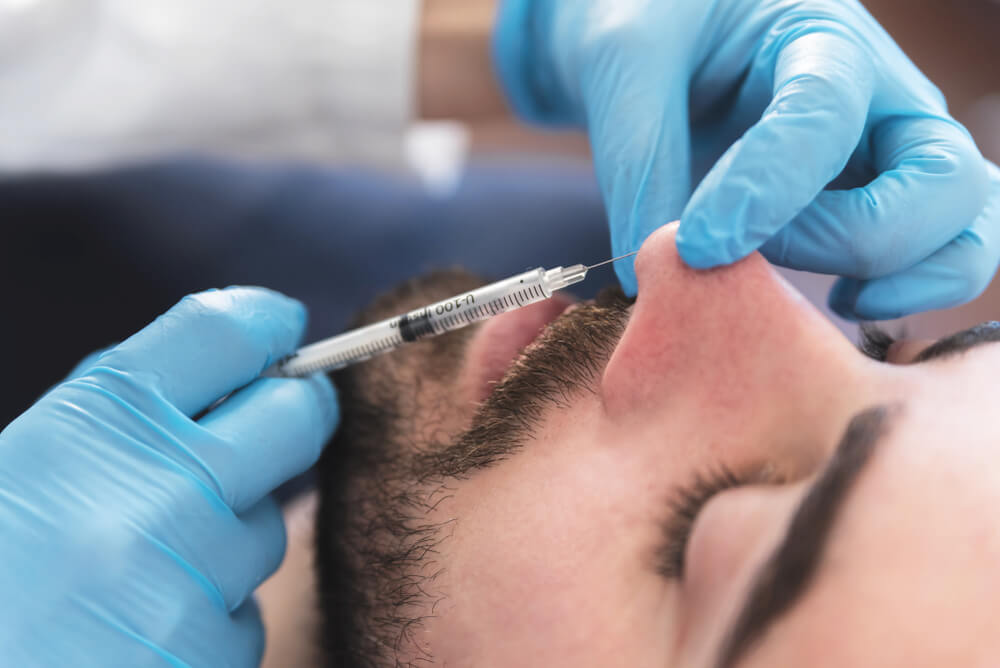
Non-surgical rhinoplasty uses dermal filler (typically hyaluronic acid) to build bridge height, smooth bumps, or lift a drooping tip. But here's what most clinics don't tell you: every millimetre added to the bridge changes the ratio. That previously balanced tip? It can suddenly appear under-projected or pinched, even though the tip itself hasn't changed.
Your nose doesn't exist as separate zones. Bridge augmentation affects how your tip reads visually. Raise the bridge, and your tip can look flatter by comparison. This is why practitioners who treat your nose as isolated injection points (radix, dorsum, tip) without analysing the whole picture create technically correct injections that still produce unbalanced results.
Where the Problem Happens (And Why You're Seeing It on Instagram)
Women seeking to smooth a dorsal hump often don't realise that raising the bridge to eliminate the bump can make their tip look smaller and less defined. The tip hasn't changed, but the visual relationship has. You came in wanting a smoother profile, but you've ended up with a tip that now looks weak.
Those wanting a straighter profile after seeing results on Instagram sometimes request bridge augmentation without understanding that their tip may need simultaneous filler to maintain proportion. This adds cost and complexity they hadn't anticipated. You thought you were booking a single-area treatment. Now you're being told you need multiple zones addressed, and your budget has increased.
The issue becomes obvious in candid photographs taken months after treatment. Profile shots reveal a flat, shapeless appearance that wasn't there pre-treatment, despite the frontal view looking improved. You look great straight-on in the mirror, but every time someone tags you in a side-angle photo at dinner, you see what went wrong. Your nose looks built up rather than naturally refined.
Why Bridge-Tip Balance Matters
A nose that looks perfect in curated before-and-after photos taken from one controlled angle can look disproportionate in real-world settings. Across a dinner table. In office meetings. In spontaneous photographs, your friends post without asking. You're not living your life at a fixed three-quarter angle with perfect lighting.
Poor bridge-tip balance makes the nose look 'built up' rather than naturally refined. It often requires dissolving and starting over, wasting both money and months of your time. For women investing in facial aesthetics to enhance confidence, a result that only works from certain angles defeats the purpose. It can create more self-consciousness than the original concern.
You wanted to feel confident in every photo. Instead, you're analysing every tagged post, untagging yourself, asking friends to reshoot from different angles. This isn't what you signed up for when you booked that appointment based on a gorgeous Instagram gallery.
Why Practitioners Miss This (And How to Spot the Red Flags)
Many practitioners learned non-surgical rhinoplasty through short training courses that focus on technical injection points without teaching the three-dimensional facial analysis that determines how much filler each area needs relative to the others. They know where to inject. They don't necessarily know how much, or whether they should inject at all.
Patients contribute to the problem by bringing reference photos of noses that suit different facial proportions. A petite, upturned nose that works on a small face won't translate to someone with a longer face or stronger jawline. But clients often don't realise their bone structure limits which Instagram noses are achievable. You see a profile you love, save it, show it at consultation. What you don't see is that person's facial thirds, their chin projection, their forehead slope, all the contextual factors that make that specific nose work on that specific face.
Additionally, practitioners who primarily offer other treatments may add non-surgical rhinoplasty to their menu without mastering the advanced skill set it requires. They're great at lip filler. They do beautiful jawline contouring. But non-surgical rhinoplasty is a different beast. It requires understanding facial angles, projection, and proportion in a way that treating isolated features doesn't. You end up with technically competent injections that still produce unbalanced results.
How to Identify If a Practitioner Understands This
During consultation, a skilled injector will photograph your profile and analyse your existing bridge-tip ratio before discussing what's possible. They won't immediately agree to the changes you request. If a practitioner says yes to everything you ask for without analysis, that's a red flag, not validation.
They'll explain whether your concern (bump, drooping tip, wide appearance) can be addressed with filler alone or whether you're not a good candidate. Some noses require excessive filler volume to achieve what you want, and that increases complication risks. A practitioner who tells you what you can't have is often more trustworthy than one who promises everything.
Ask about maintenance honestly. Non-surgical rhinoplasty requires treatment top-ups every 12-18 months. Some patients eventually need surgical intervention if their goals exceed what filler can safely achieve. A practitioner who discusses long-term outcomes (not just immediate results) understands you're committing, not booking a one-off appointment.
Questions to Ask During Your Consultation
- Will my tip need augmentation to maintain balance if you raise my bridge?
- What volume of filler are you planning to use, and why?
- Am I a good candidate for this treatment, or would I be better suited to a different approach?
- How will this look in 12 months when the filler settles?
If a practitioner can't answer these confidently or dismisses your questions as overthinking, walk away. Your face isn't a practice canvas for someone still learning advanced techniques.
How Facial Perfection Closes the Gap Between Instagram Inspiration and Real Results
Facial Perfection practitioners assess your full facial proportions during consultation, not just your nose in isolation. They determine whether non-surgical rhinoplasty will enhance your overall balance or create new disproportion. This matters because your nose doesn't float in space. It exists in relationship to your chin, your forehead, your cheekbones. Changing one element affects how all the others read.
For women seeking straighter profiles or smoother bridges, the clinic explains whether tip augmentation is needed to maintain harmony. You're not upsold treatments you don't need, but you're also not under-treated because a practitioner didn't want to discuss additional costs. You get realistic expectations.
The doctor-led approach means practitioners can identify when non-surgical rhinoplasty isn't the right solution. For example, if your tip droops due to weak cartilage rather than a lack of volume, filler won't address the cause. You'd be better served exploring surgical options. A clinic that earns money from non-surgical treatments but still tells you when surgery is the better option? That's a clinic prioritising your outcome.
This level of analysis is what separates a quick treatment from a considered enhancement. You're not just getting filler. You're getting a facial assessment that considers proportion, structure, and long-term outcome.
What You Should Expect From Your Non-Surgical Rhinoplasty Consultation
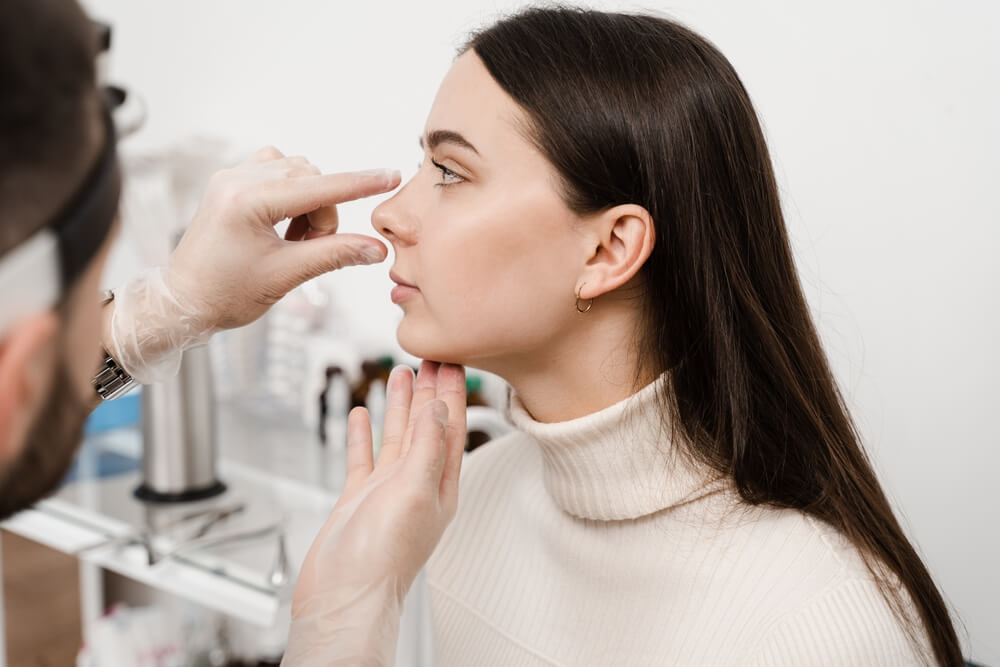
Your practitioner should photograph you from at least three angles: frontal, left profile, and right profile. They should discuss your existing bridge-tip ratio and explain how your requested changes would affect it. If they don't take profile photos, they're not analysing the most critical view for this treatment.
They should ask what you dislike about your current nose and what results you've seen that you'd like to achieve. But they should also explain which of those results are achievable for your facial structure and which aren't. You want honesty, not agreement.
Expect a discussion about volume. How many millilitres of hyaluronic acid filler will be used? Where will it be placed? How will that change your profile? If a practitioner can't give you specific numbers, they're guessing. This isn't a treatment you want guessed at.
You should leave the consultation understanding exactly what will happen, what it will cost, what maintenance looks like, and what you'll look like from every angle. If you leave confused or unclear, book a second opinion before committing.
The Reality of Maintenance (Because No One Stays Filtered Forever)
Non-surgical rhinoplasty isn't permanent. Hyaluronic acid filler gradually breaks down, and you'll need top-ups every 12-18 months to maintain your result. Some practitioners offer a lower initial price but charge more for top-ups. Others include maintenance in their pricing structure. Ask upfront what the long-term cost looks like, not just the first treatment.
Some women find that after two or three rounds of filler, they want more significant changes than non-surgical options can deliver. At that point, surgical rhinoplasty becomes the more cost-effective long-term solution. A good clinic will have that conversation with you early, so you're making an informed choice about whether to invest in a temporary solution or save for a permanent one.
Your face will also change over time. The nose that looked balanced at 24 may need adjustment at 28 as your facial structure matures. This isn't a treatment failure. It's a reality of facial aesthetics. Choosing a clinic that offers long-term care (not just one-off appointments) means you have support as your needs evolve.
Non-Surgical Rhinoplasty: When It Works, and When It Doesn't
Non-surgical rhinoplasty works brilliantly for smoothing small bumps, lifting a slightly drooping tip, or improving symmetry. It doesn't work well for making a large nose smaller (you can't remove structure with filler), for correcting severe deviation, or for addressing functional issues like breathing problems.
If your goal is subtle refinement and improved profile balance, you're an ideal candidate. If your goal is dramatic reduction or reshaping, you're not. A practitioner who tries to deliver surgical-level changes with filler is setting you up for an overdone, unnatural result that requires dissolving and potentially causes complications.
Be honest about your goals during consultation, and listen when a practitioner tells you what's achievable. The best result is one that enhances your features whilst looking like you were born with that nose. If people can tell you've had work done, the treatment has failed its purpose.
Your Next Step: Book a Consultation That Actually Analyses Your Face
Non-surgical rhinoplasty can create the refined, balanced profile you've always wanted, but only when practitioners understand that your nose exists in relationship to your face, not as an isolated feature to be corrected point by point. Bridge-tip balance is the difference between the results you're proud to show in every photograph and results you strategically angle to hide.
Choosing an injector who analyses the proportion before picking up a syringe is non-negotiable. You're not booking a 15-minute appointment for a quick cosmetic tweak. You're investing in a treatment that changes how your face reads from every angle, in every lighting condition, in every candid photo your friends post for the next 12-18 months.
Book a non-surgical rhinoplasty consultation at Facial Perfection in Derby or Burton to see how your unique facial structure determines what's achievable and what will enhance your face.

Continue reading our content…



All our treatments are individually recommended and tailored to suit your lifestyle and budget.



Book A Consultation
Please leave your details below and one of our team will be in touch to arrange your consultation.
Thank you for reaching out to Facial Perfection. Your enquiry is important to us, and we are dedicated to offering you an exceptional service.
Our team is currently reviewing the details you've provided, and we will reach out to you to schedule a consultation.
We look forward to welcoming you to the clinic soon.